
The article addresses a reader decision using primary sources and clearly labelled illustrative examples. It does not rank every available product.
Commercial status: There are no affiliate links in this edition. Providers did not pay for inclusion or approve this copy.
TransUnion's UK consumer score is moving to a new model and a 0–999 range. A different number during that transition does not establish a new event in your credit history. The first useful comparison is between the report entries behind the displays.
The bureau announced the change on 26 August 2026, with partner implementation planned from late September 2026 to June 2027. It describes a model combining patterns over time with a current snapshot. This is continuing rollout guidance, checked on 7 October, rather than a new October launch.
The model changed as well as the maximum

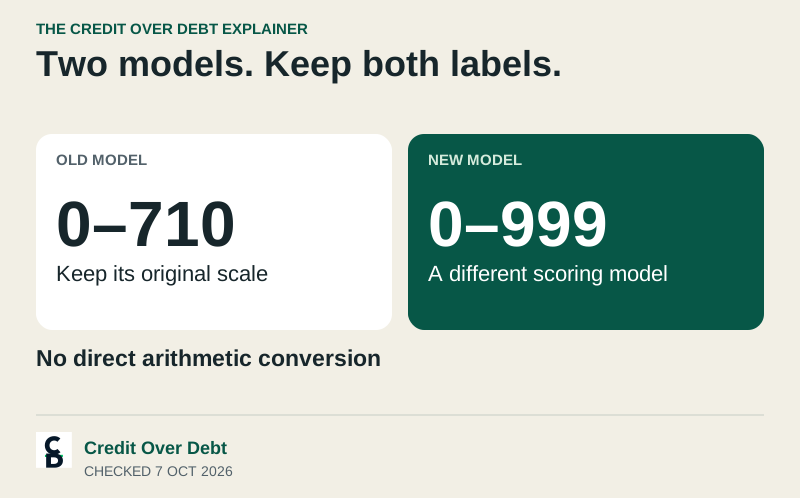
Read infographic as text
- Old TransUnion UK consumer model: score range 0–710.
- New TransUnion UK consumer model: score range 0–999.
- Record the provider, model and observation date. Do not multiply an old score to manufacture a new one.
A larger maximum creates an obvious temptation: turn the old number into a percentage and apply it to the new scale. That would be defensible only if the two models differed solely in their numerical range. It would still require confirmation from the organisation supplying the scores.
Here that confirmation is absent. Do not create a converted score, add it to your records or use it to choose a product. Keep the original number with its original scale. A calculation that produces a plausible-looking result does not make the result a bureau assessment.
TransUnion says the underlying report information is unchanged by this migration, that two score versions may temporarily appear, and that the models are not directly comparable. Those statements concern the migration itself. They do not rule out a separate account update reaching your report at the same time.
Separate two possible explanations

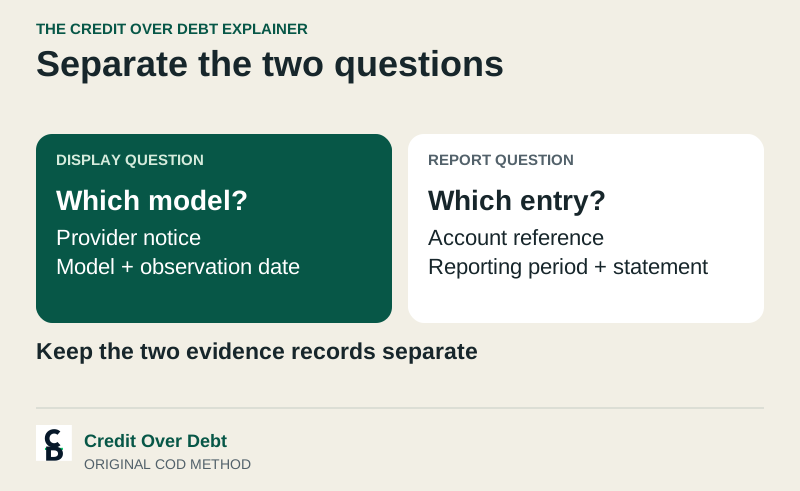
Read infographic as text
- Display question: has the service changed its score model? Save the provider notice, model and date.
- Report question: has an account entry changed? Compare the account reference, reporting period and statement.
- A different displayed score alone cannot identify the cause of a report discrepancy.
There are two questions to investigate: has the service changed its displayed model, and has an underlying entry changed? A screen can answer the first while an account statement helps answer the second. Mixing those questions makes an ordinary display change look like a documented financial event.
Start with the service name, observation date, maximum score, displayed number and band. Add any migration notice supplied by the service. An unexplained difference between two apps is a question for their support teams; it is not enough evidence to attribute the movement to a missed payment or correction.
Then make a separate list of entries you want to compare. Use the account reference and reporting period so that two similar creditor names do not become one assumed account. Mark information you cannot yet confirm as unknown. A short, dated record is more useful than a confident guess.
Build a record that survives the transition
A paper sheet is sufficient. Give each observation its own row rather than replacing yesterday's value with today's display. Save the associated report or screenshot somewhere private. If you share a query with support, include the relevant detail rather than sending your entire financial history unnecessarily.
As an illustrative record, one row could read: 7 October, App A, maximum 710, old model shown. Another could read: 7 October, App B, maximum 999, new model shown. These are invented labels, not observations of particular providers. The two rows establish that a comparison needs model information before it needs arithmetic.
If a historical chart joins old and new points, ask the service how it treats the transition. Until its answer is clear, preserve the distinction in your own notes. A line drawn between two values does not demonstrate a continuous measurement when the method has changed.
The consumer display leaves the lending decision open
TransUnion says lenders combine credit-report information with their own criteria; the displayed consumer score does not determine acceptance. The bureau's statement about its migration therefore cannot supply a personal interest rate, limit or affordability decision.
If you need to borrow, keep the application question separate from the display question. Write down the purpose, amount and payment you can sustain. Compare those requirements with a documented offer, including fees and any conditions remaining. A preferred score label cannot replace missing terms.
The APR and fee comparison guide helps organise that price comparison. Apply its stated scope to the product you are considering. If the offer is indicative, leave the final price unconfirmed rather than treating a representative example as your own quotation.
Investigate a factual discrepancy before buying a remedy
When an entry appears wrong, identify the exact account, date and statement involved. Keep the supporting document and the question you want answered together. Our credit-report dispute guide illustrates evidence organisation, but its legal process is US-focused; UK readers should use the UK bureau's published route.
A paid monitoring service may be convenient, but convenience does not establish that it can control a lender's decision. Avoid paying because a sales message treats the migration as an emergency. If you do not need new credit and find no discrepancy, understanding the change can be the whole task.
For an existing decline, keep the lender's explanation beside the report. The guide to using a denial reason is US-focused and helps structure the next question. It cannot establish that a UK score migration caused your particular result.
The evidence to obtain next
Choose the missing fact that matters: confirmation of the displayed model, an answer about one report entry, or the actual terms of a proposed loan or card. Save that answer with its date. The migration creates a measurement question; whether to borrow still requires your own documented cost and repayment comparison.
From comparison to calculation
Check the terms in the offer you actually receive.
Credit Over Debt’s Offer X-Ray compares the amount financed, fees, payment schedule and modeled cost using the figures you enter.
Open the free toolkitPrimary sources and product pages
- TransUnion UK: The new TransUnion credit score explained (checked 2026-10-07)
- TransUnion UK: Launch of expanded 0–999 UK consumer score (checked 2026-10-07)
- TransUnion UK: Consumer support and credit-report FAQs (checked 2026-10-07)
Product details last checked Oct 7, 2026; next scheduled review Nov 6, 2026. This UK-focused guide is educational information, not individualized financial, legal or tax advice. Product terms, offers and eligibility can change.