
The article addresses a reader decision using primary sources and clearly labelled illustrative examples. It does not rank every available product.
Commercial status: There are no affiliate links in this edition. Providers did not pay for inclusion or approve this copy.
A pre-approved message can leave you unsure whether there is anything left to check. Start by saving the exact wording. Then find the sentence that explains what happens when you continue.
You are looking for three things: the search being proposed, the conditions remaining and the terms offered. This guide uses a UK eligibility checker and US prescreened offers as separate examples. The same reassuring label does not give every journey the same meaning.
Write down the stage you have reached

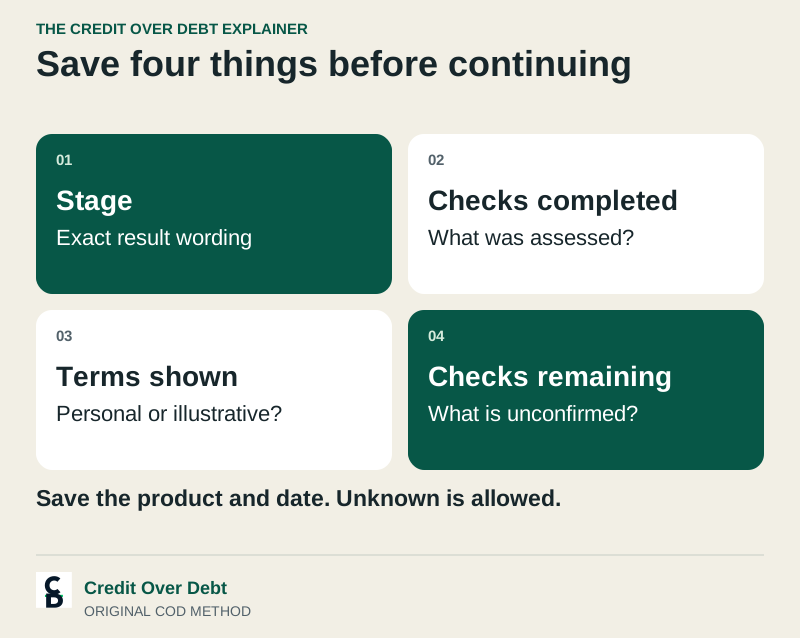
Read infographic as text
- Stage: copy the exact result wording.
- Checks completed: record what the provider says it assessed.
- Terms shown: record whether the rate or limit is personal, representative or possible.
- Checks remaining: record documents, searches or conditions still to be confirmed.
- Save the product and date. An unexplained field stays unknown.
Use four headings on paper or in a note: stage, checks completed, terms shown and checks remaining. Copy the product name and date first. An invitation to apply, an estimate and an application decision belong in separate rows.
Leave a field marked unknown if the screen does not explain it. You do not need to guess how the provider assessed you. Keep the original wording beside your note so you can ask a precise question later.
Next, look for whether a rate or limit is personal, representative or only possible. An attractive example can help you understand a product while leaving your own price unsettled. Record any expiry date shown with the result.
Read the UK checker's own explanation
HSBC UK describes its eligibility checker as indicative. It uses Experian information and HSBC's criteria, with a soft search that HSBC says does not affect your score. A full application follows. This is one issuer's explanation, checked on 7 October 2026, rather than a promise about every checker.
Before using another service, read its explanation of the search. Keep the result with the product you actually checked. If you switch cards or change the requested amount, ask whether the earlier result still applies.
If the next screen is unclear, stop there and use the provider's official help route. Ask: what information remains to be verified, and will continuing submit a full application? A useful answer names the stage and proposed checks.
Keep US prescreened offers separate
The CFPB says a US prescreened credit offer is a firm offer, but you must still apply and be approved. The issuer can check your current report and additional criteria that existed when it made the offer, including sufficient income. The guidance was last reviewed on 22 January 2024 and remains continuing guidance.
The CFPB also distinguishes invitations sent using names obtained from other sources. An invitation is not automatically a prescreened offer. Save the actual document and its conditions before deciding what it means.
Do not carry the HSBC example's soft-search statement into a US application. Read the issuer's own disclosure. If you cannot identify the proposed search, keep that field unknown and ask before proceeding.
Use a small example to find the missing price

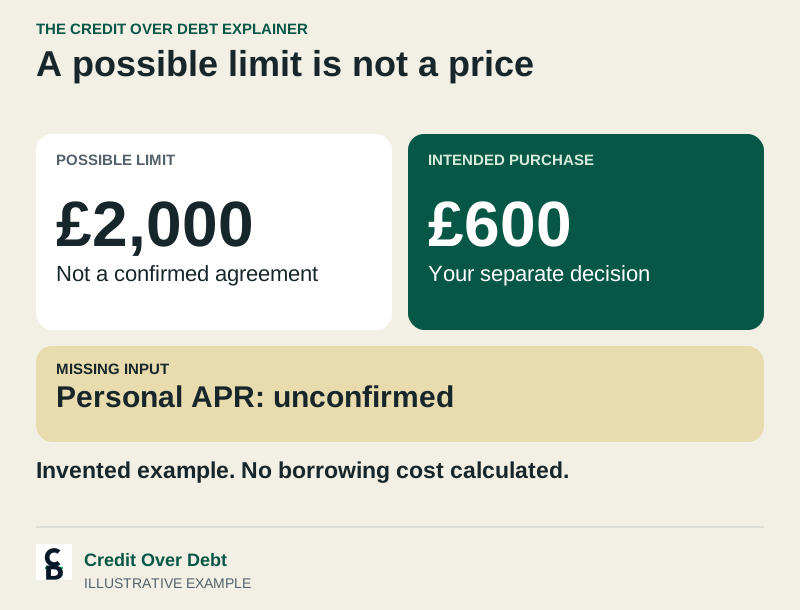
Read infographic as text
- Invented possible card limit: £2,000.
- Invented intended purchase: £600.
- Personal APR: unconfirmed. The cost of carrying the £600 balance cannot be established from the possible limit.
- Ask for the actual rate, fees and repayment terms before making a cost comparison.
Here is an illustrative record using invented figures. A screen shows a possible £2,000 card limit but no personal rate. You plan a £600 purchase. The possible limit does not tell you the cost of carrying that £600 balance.
In your note, put £2,000 under possible limit and leave the personal rate unconfirmed. Add the intended £600 purchase separately. This keeps the amount offered from becoming the amount you decide to borrow.
When actual terms arrive, write down the fees, payment dates and repayment plan. Compare them with money available after your existing commitments. Our APR and fee guide helps organise the comparison; use the scope appropriate to your product.
Read the next screen before accepting
Look for the requested documents, the amount being applied for and the terms you would accept. Check whether the message describes a decision or something still subject to verification. Keep a copy of the final documents rather than relying on the earlier headline.
If a price or limit changes, add a new row to your note. Do not overwrite the earlier result. Having both versions makes it easier to ask what changed and whether the new commitment still fits.
Our inquiry and rate-shopping guide is US-focused. It helps explain why a search needs context, but does not establish a UK checker's rules. The provider's current disclosure remains the place to verify this journey.
A promising result does not require an application
You can compare without applying or decide to wait. If you do not need the product, a positive early result creates no task to complete. If the payment would leave too little for essentials, saving or reducing the purchase may be more manageable.
If you are considering new borrowing because existing payments no longer fit, contact the current provider through its official route or seek independent debt help. Another eligibility result cannot resolve that shortfall. No paid credit-repair service or monitoring subscription is required by this guide.
If an application has already been declined, save the explanation. Our denial-letter guide explains US rights and evidence gathering. UK readers should ask their lender about its explanation rather than assuming those US legal requirements apply.
Ask one question before continuing
With the saved result open, identify the most important unknown. Ask the provider to confirm that one item, whether it is the proposed search, a remaining condition or the price. Keep the answer with the result before you decide whether to apply.
From comparison to calculation
Check the terms in the offer you actually receive.
Credit Over Debt’s Offer X-Ray compares the amount financed, fees, payment schedule and modeled cost using the figures you enter.
Open the free toolkitPrimary sources and product pages
- HSBC UK: Credit card eligibility checker (checked 2026-10-07)
- Consumer Financial Protection Bureau: What is a prescreened credit card offer? (checked 2026-10-07)
Product details last checked Oct 7, 2026; next scheduled review Nov 6, 2026. This UK and US-focused guide is educational information, not individualized financial, legal or tax advice. Product terms, offers and eligibility can change.